

We’re going to go ahead and say it: Cook County is Minnesota’s Fall Color Capital.
Is that a confident statement? Sure. But spend one September afternoon driving the backroads above Lake Superior, hike to an overlook surrounded by red maples and golden birch, or head up the Gunflint Trail when the tamaracks start turning, and the argument starts making itself.
Fall has always been a big deal around here. This year, we’re simply making it official.
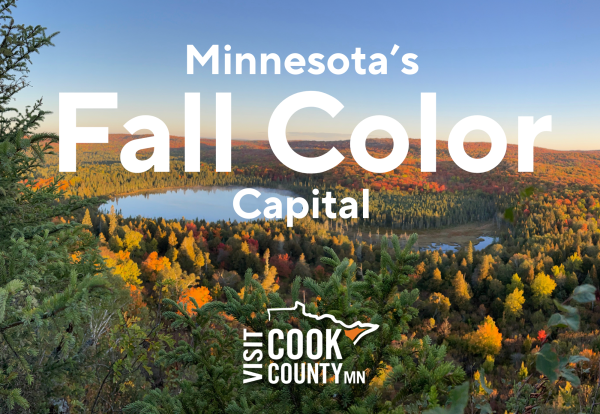
Why Cook County?
For starters, fall color in Cook County doesn’t happen all at once.
Our geography stretches from the shoreline of Lake Superior into the higher elevations of the Sawtooth Mountains and deep into the Superior National Forest. That variation means different areas change at different times, giving Cook County an unusually long window for fall color.
The first hints can show up as early as late August. Peak color typically arrives around the last weekend of September and first weekend of October, but pockets of brilliant color can continue through the end of October.
There’s More Than One Kind of Fall
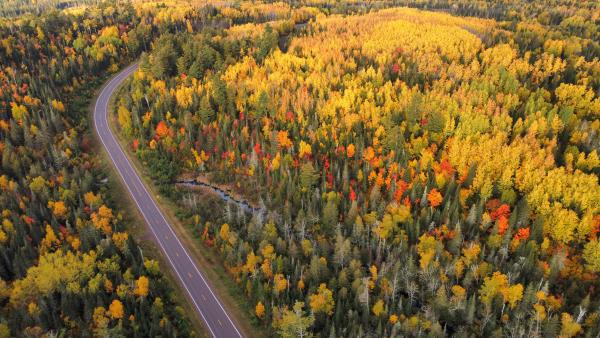
Early in the season, maples take center stage. Head inland from Lake Superior and you’ll find hillsides filling with deep reds and bright oranges, especially along the ridgelines and backroads around Lutsen, Tofte and Schroeder.
Then the season shifts.
Birch and aspen bring waves of yellow and gold. Later still, the tamaracks change from green to brilliant gold across the wetlands and forests farther inland. By then, many deciduous trees have already dropped their leaves, which makes the tamaracks look even more dramatic.
That progression is a big part of what makes fall in Cook County different. You’re not necessarily chasing one “peak weekend.” You’re following color as it moves across the landscape.
More Than 400 Miles of Front-Row Seats
Of course, colorful trees are only useful if you can actually get out and see them.
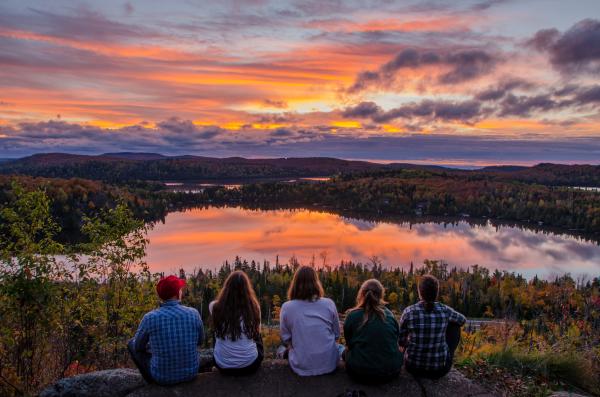
Cook County has more than 400 miles of hiking trails, ranging from quick climbs to longer sections of the Superior Hiking Trail. Many lead to overlooks where the forest stretches toward Lake Superior or rolls inland for miles.
Oberg Mountain is a fall favorite for good reason. The loop delivers multiple overlooks with views across the surrounding forest and Lake Superior. Pincushion Mountain near Grand Marais offers another easy way to get above the canopy, while trails farther up the Gunflint Trail, like the Magnetic Rock Trail, put you right in the middle of the boreal forest.
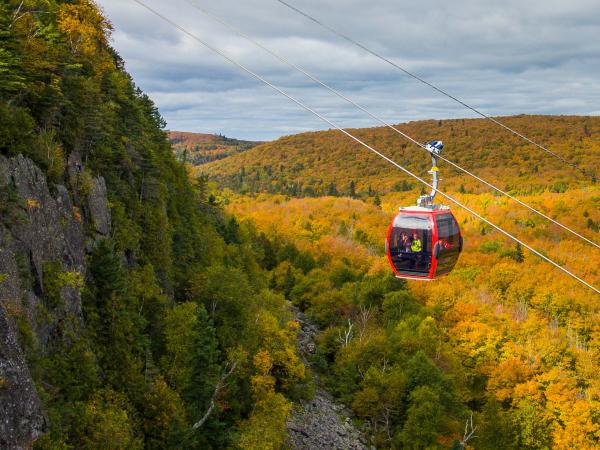
And if hiking uphill isn’t part of your fall vacation plan, The Summit Express Gondola at Lutsen Mountains offers expansive views over the Sawtooth Mountains and Lake Superior with considerably less effort.
The Scenic Route Is Basically Every Route
Cook County also happens to be exceptionally good at fall drives.
Highway 61 follows Lake Superior through the county, but some of the best fall color appears when you turn inland. Roads like the Sawbill Trail, Caribou Trail and Gunflint Trail climb away from the lake and into forests that can look completely different from one week to the next.
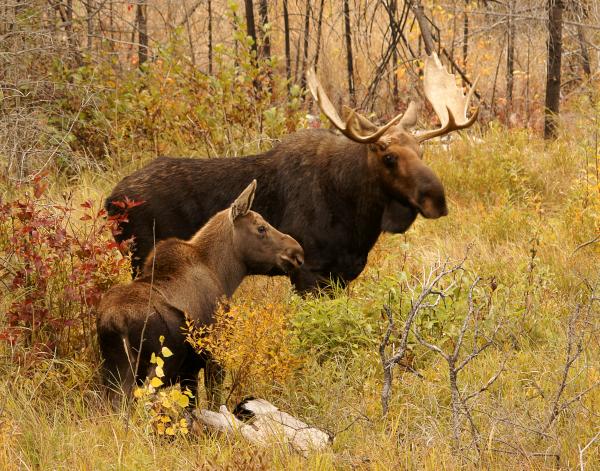
The Gunflint Trail National Scenic Byway is especially impressive in autumn. There’s also the possibility of spotting a moose along the way, particularly around dawn and dusk.
No moose? You still drove through 57 miles of fall color. We’d hardly call that a loss.
Fall Goes Beyond the Leaves
The scenery gets most of the attention, but autumn in Cook County has plenty going on underneath the canopy.
Fall is an excellent time to go out for a paddle on an inland lake or into the Boundary Waters. Cooler temperatures and fewer insects make wilderness travel especially appealing. Wildlife becomes more active, migratory birds move through the boreal forest, and clear nights offer opportunities for stargazing and northern lights.
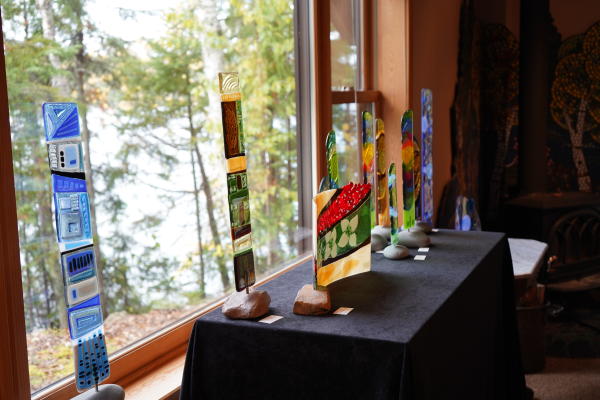
There’s plenty happening in town, too. Fall events like Art Along the Lake bring visitors into studios and galleries throughout the county, while local restaurants, shops and lodging properties settle into the season.
Then, toward the end of October, fall starts getting louder.
The famous gales of November begin to build as colder weather moves across Lake Superior. Fall color season slowly gives way to storm season, trading quiet forests for crashing waves along the shoreline.
Come See the Fall Color Capital for Yourself
Calling Cook County Minnesota’s Fall Color Capital isn’t about claiming that pretty leaves stop at the county line. Minnesota has plenty of great places to experience autumn.
We just happen to have the best.
Color can stretch from late August into October. You can see it from mountain overlooks, winding backroads, inland lakes and the shoreline of the world’s largest freshwater lake by surface area. You can hike through it, paddle beneath it or simply find a good window and stare at it over your morning coffee.
And because the color changes across different elevations and landscapes, no two fall trips look exactly alike.
So yes, we’re calling it.
Cook County is Minnesota’s Fall Color Capital. Come up this fall and check our work.